
REVIEWING KENYA'S FOREIGN POLICY
The Kenya Foreign Policy published in November 2014, has served as the framework for Kenya's diplomatic interactions over the past decade. This policy was a significant milestone, as it was the first comprehensive framework of its kind since the country’s independence. In the context of a dynamic international landscape characterized by the decline of multilateralism and the emergence of a multipolar world, there has been increasing need for review of the policy to ensure that it remains effective in promoting Kenya's national interests and values anchored on the overarching objective of protecting, promoting and projecting the nation’s interests. The Kenya Foreign Policy published in November 2014, has served as the framework for Kenya's diplomatic interactions over the past decade. This policy was a significant milestone, as it was the first comprehensive framework of its kind since the country’s independence. In the context of a dynamic international landscape characterized by the decline of multilateralism and the emergence of a multipolar world, there has been increasing need for review of the policy to ensure that it remains effective in promoting Kenya's national interests and values anchored on the overarching objective of protecting, promoting and projecting the nation’s interests. The Kenya Foreign Policy published in November 2014, has served as the framework for Kenya's diplomatic interactions over the past decade. This policy was a significant milestone, as it was the first comprehensive framework of its kind since the country’s independence. In the context of a dynamic international landscape characterized by the decline of multilateralism and the emergence of a multipolar world, there has been increasing need for review of the policy to ensure that it remains effective in promoting Kenya's national interests and values anchored on the overarching objective of protecting, promoting and projecting the nation’s interests.
The Kenya Foreign Policy published in November 2014, has served as the framework for Kenya's diplomatic interactions over the past decade. This policy was a significant milestone, as it was the first comprehensive framework of its kind since the country’s independence. In the context of a dynamic international landscape characterized by the decline of multilateralism and the emergence of a multipolar world, there has been increasing need for review of the policy to ensure that it remains effective in promoting Kenya's national interests and values anchored on the overarching objective of protecting, promoting and projecting the nation’s interests.
The State Department for Foreign Affairs has organized in the past month’s forums to assess the policy and evaluate strategies that would allow Kenya to maintain an appropriate and effective posture in a world that is witnessing increased geopolitical disruptions. These forums reflecting on Kenya’s Foreign Policy 2014, bring together experts in various sectors to review and enrich the Kenya foreign policy document. The sessions also seek to identify gaps in the current foreign policy; present perspectives on Kenya’s Foreign Policy priorities; as well as consider proposals for implementation and dissemination of Kenya’s Foreign Policy while prioritizing national interests as well as advancing Kenya’s role on the global stage.
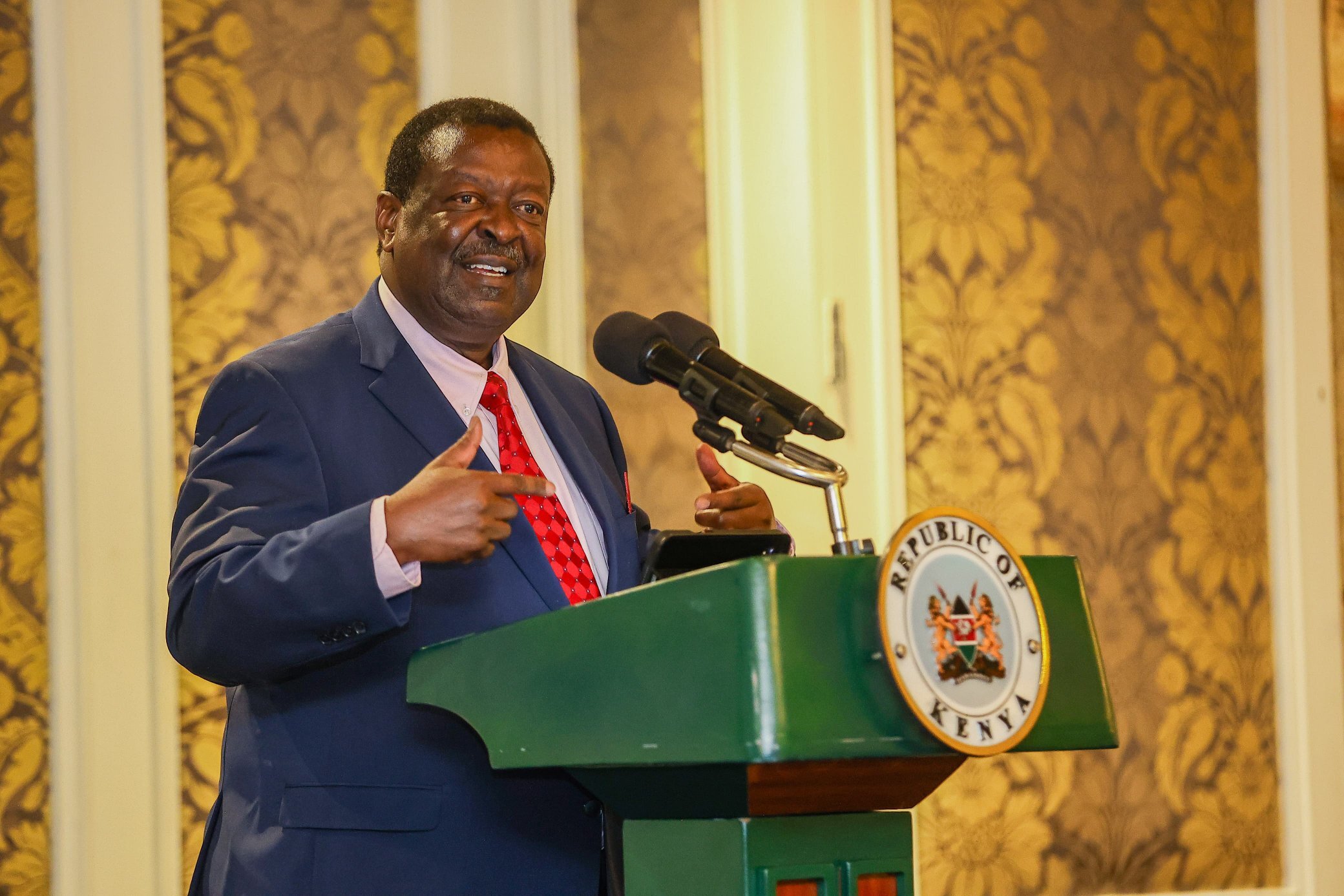
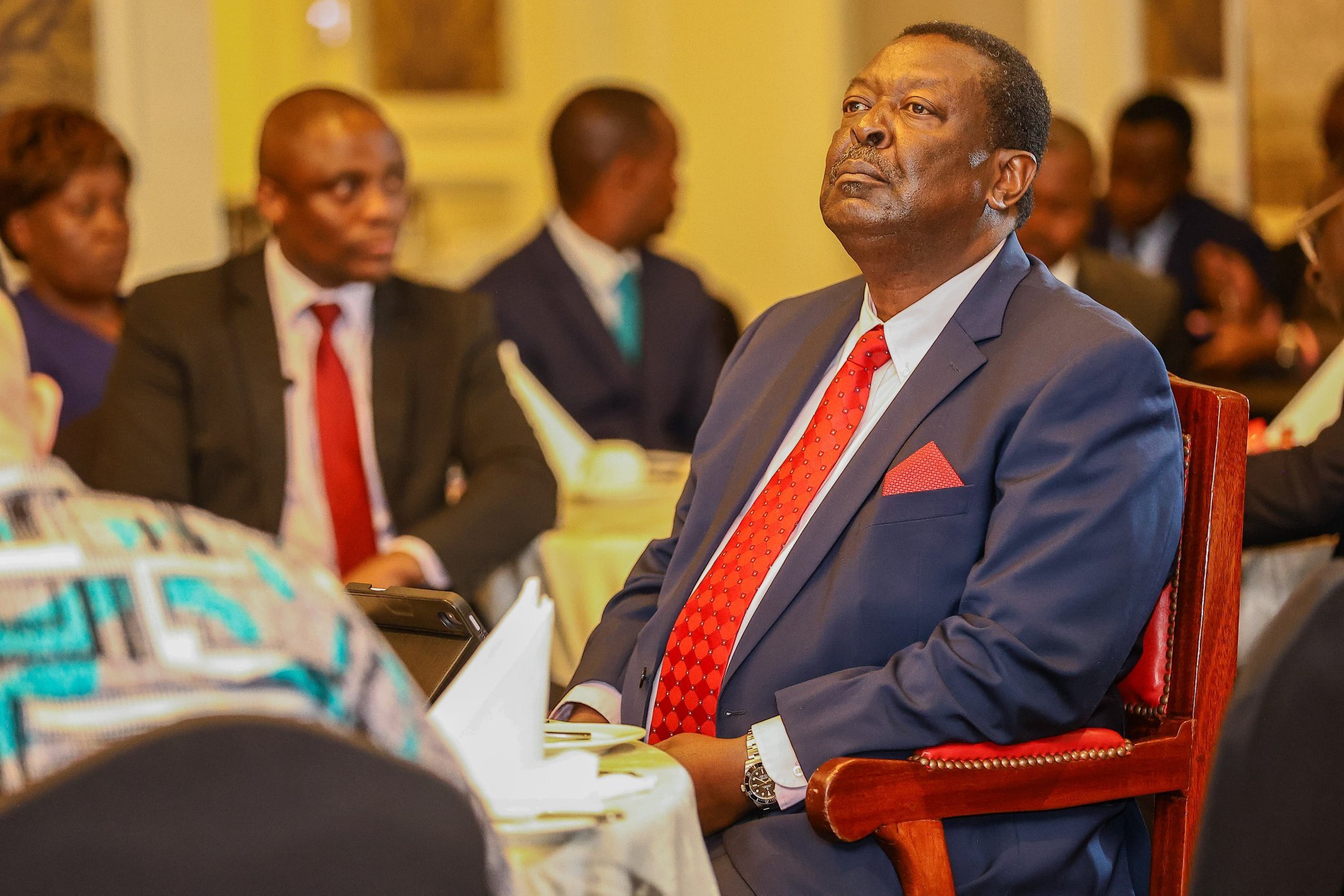
Dr. Musalia Mudavadi, the Prime Cabinet Secretary and Cabinet Secretary for Foreign and Diaspora Affairs, has officiated several of these forums which started in July during the Colloquium on the Review of Kenya’s Foreign Policy 2014. In these forums, the PCS has underscored the significance in the development of a foreign policy that is relevant, effective, and inclusive, with a focus on stakeholder engagement and scope, in order to advance the country’s national interests and values.
“Global trends are now influencing and redefining Kenya’s foreign policy, and this is the reason the Foreign Policy document must take these trends into account. Kenya isn’t an island and we must therefore have an all-inclusive foreign policy that takes to consideration the national interest of the country. Kenya’s interests are as wide as the country seeks to participate in matters global agency.” Excerpts from the PCS statement.
The review of Kenya’s Foreign Policy comes at a time when the world is experiencing a shift in global order as new alliances and rivalries emerge. The old unipolar or bipolar order has given way to the forces of the next world order where emerging powers, new actors, evolving interests, and the assertiveness of developing states are recalibrating the global status quo. Kenya must therefore pursue a robust, pragmatic, and strategic foreign policy hinged on diplomatic wisdom and tact as it endeavors to lead the region and continent in rallying a common and well-coordinated diplomatic response to the new scramble and geopolitical influences by emerging and traditional powers. This has the potential to guarantee the security and prosperity of Kenya while promoting regional cooperation and peaceful co-existence for mutual benefit.
The process of the review is set to create transparency on Kenya’s foreign policy agenda to citizens while informing the citizenry of Kenya’s global involvement in a wide range of areas including peace and security in a volatile global landscape; examining the geopolitical context of the foreign policy while appreciating the impact of Kenya’s diaspora’s whose remittance is estimated Kshs. 671 billion.
Diaspora engagement has been invigorated to contribute to Kenya’s national development agenda and this was actualised through the designation of a fully- fledged State Department for Diaspora Affairs under a Principal Secretary. As one of the pillars of Kenya’s foreign policy, Diaspora diplomacy aims to harness the diverse skills, knowledge, expertise, and resources of Kenyans abroad, and facilitate their integration into the national development agenda. Kenya continues to engage global partners to diversify and increase international employment opportunities for its citizens.
Dr. Mudavadi continues to allude to the deployment of soft power, including cultural diplomacy, educational exchanges, and international media as elements for “not only shaping public opinion but also building and maintaining global influence.
“Kenya continues to leverage its soft diplomacy tools such as cultural exchanges, training, capacity building, peace interventions, sports, and art. Kenyan sports people especially athletes continue to raise the country’s flag and image globally. Kenya will seek to promote sports tourism by hosting and supporting international sporting events.
In the grand strategy, Kenya shall support Creative Arts by marketing Kenya as film production destination and support the internationalization of local film production and content. This will go a long way to support Kenya’s projection of its soft power diplomacy. The establishment of a pool of veterans for mediation and special envoys on peace, technology, and blue economy, for instance, is part of the grand schemes in projecting Kenya’s image to attract investment, promote tourism, and strengthen diplomatic ties.” Excerpts from the PCS statement.
Participants were called upon to make considerations towards advancing Kenya’s position on Green Growth; review of perceptions on Diaspora Diplomacy and Labour migration geared towards protecting, engaging, empowering and prosperity of the diaspora: enhancing Digital-tech Diplomacy by prioritising technologies considered as catalysts for development and strengthening constitutionalism and the Rule of Law.
Kenya has centralized technology diplomacy by positioning itself as a regional frontrunner in the digital diplomacy sphere. Tech diplomacy facilitates diplomatic outreach and networking, enhances global visibility, and cultural exchanges. Tech diplomacy offers a novel way to negotiate, cooperate, and address pressing global challenges of our time such as climate change, industrialization, digital divide, cybersecurity, misinformation and disinformation, and rapidly advancing information space. The appointment of the Special Envoy for Technology attests to the significance that Kenya attaches to tech diplomacy.
Kenya’s growth on the international stage has been described as BOLD taking into consideration the various moments the country has been at the forefront in geopolitics and in defence of its strategic national interests. Kenya continues to pitch on Summit diplomacy which has seen the president lead Kenya’s foreign policy from the front, directly engaging other heads of state and government. The emerging trend today is the continuous use of high-level visits, including state visits by state leaders to drive their countries foreign policy agendas.
Geo-economics as a driver of foreign policy is largely being embraced where states focus on the use of economic tools such as trade policies, foreign investment, global financial systems, economic sanctions, foreign aid and grants to promote and defend their national interests while achieving imperative geopolitical objectives. Kenya continues to advocate for a multilateral trade and financial system that is founded on equity, inclusion, and fairness. One that promotes prosperity for all and does not prioritize the dominance of one or a few.
The review of the policy presents an opportunity to interrogate and understand Kenya’s foreign policy articulation based on the values and norms that support Kenya’s interests while seeking realignment to accommodate citizen engagement on matters foreign policy. It means therefore that Kenya must operate by the realpolitik maxim that Kenya is a unitary and rational actor in international relations. Kenya is challenged to face the outside world as a monolithic actor representing the proud citizens of Kenya. This, is what defines Kenya’s patriotism.
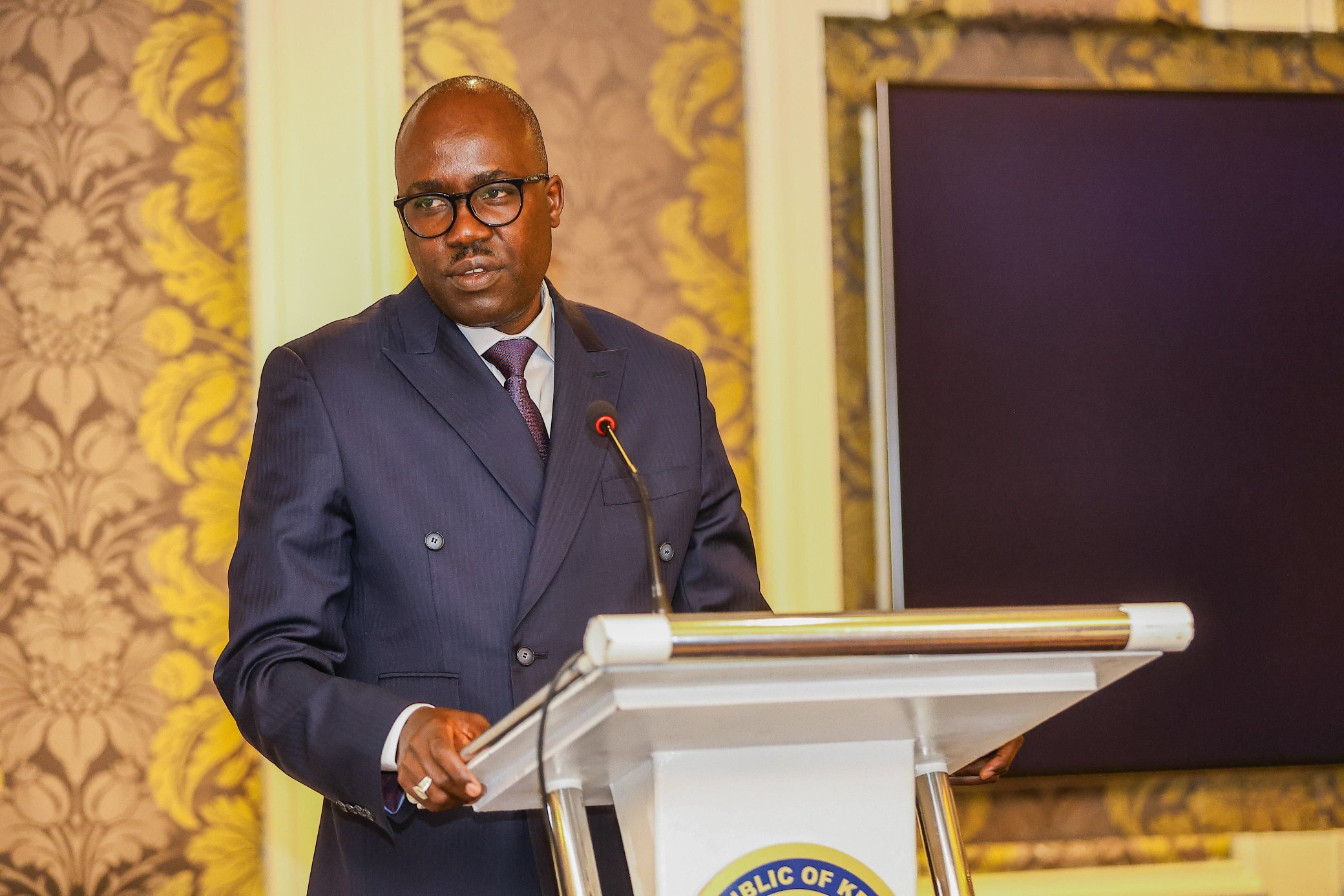
Dr. Korir Sing'Oei, Principal Secretary of the State Department for Foreign Affairs, has been moderating panel discussions since the launch of the inaugural session of the July 2024 Colloquium. The panels discuss diverse subjects, including: Kenya's Foreign Policy Evolution and the Future Perspective; the geopolitical context of Kenya's Foreign Policy; Peace Diplomacy; Diaspora Diplomacy; Economic Affairs and Commercial Diplomacy; Digital Diplomacy; Socio-Cultural Diplomacy; Environmental Diplomacy and Climate Change; Global Governance (multilateralism) and the role of media on articulating foreign policy.
The panelists also discussed Kenya's foreign policy priorities, identified deficiencies in the current foreign policy, and proposed strategies for implementation and dissemination. The discussions further underscored the necessity of reevaluating perceptions of the diaspora in order to better protect, engage, and empower them; prioritize technology as a catalyst for development to enhance digital diplomacy; reinforce constitutionalism and the rule of law. In a session with media stakeholders, it was evident that media was the main conduit between the citizens, legislators and government towards increasing and shaping public opinion and articulating foreign policy.
Kenya’s grand strategy envisages employing economic, diplomatic, defence, technological, and other means to achieve foreign policy objectives. The country is called upon to be strategic in its foreign policy projection. Kenya stands for global solidarity, equity, fairness, and collective security where crises receive equal attention. Kenya supports the view that security threats in one part of the world should be treated as a threat to the entire world and all actors should collectively address it.
Kenya’s peace diplomacy is fine-tuned, and more purposeful. Kenya is fully committed to the principles of peaceful co-existence, non-interference, and respect for sovereignty. As a state, Kenya endeavors to be at peace with other states and seeks to establish mutually beneficial ties with as many states as possible in the world. The zero-sum Cold War approach has been replaced with cooperation, mutual respect, and collective security.
Regional integration provides a huge opportunity for win-win diplomatic outcomes. Kenya notes the geo-strategic constraints that landlocked countries face are increasingly becoming major drivers of conflicts on the continent. There are 16 landlocked countries in Africa with a combined estimated population of 378 million people. Kenya advocates for the establishment of a Contact Group or Working Group to discuss, negotiate, and assess the concerns of the often-forgotten landlocked countries and sticking contentious issues or conflicts relating to maritime access. The friendly and cooperative ties with the neighboring states within the East African Community are the number one referents of Kenya’s foreign policy.
As a region, countries have become increasingly interdependent hence trade tensions and absolute detachment are no longer justifiable within the East African Community.
The future of the region and continent depends on deepening integration. Kenya, as a core state in the region and Africa, is committed to the promotion of intra-Africa trade under the collective aspirations of the African Continental Free Trade Area (AfCFTA) and the African Union’s agenda of visa liberalization to foster Africa’s integration. Kenya will continue to engage in transnational infrastructural connectivity to enhance intra-Africa trade and people-to-people relations. For instance, infrastructural development such as the Trans-Africa Highway Network will open the continent for trade and development.
The 46,455 kilometers Trans-African Highways is envisioned by the African Union and executed with the collaboration of multiple nations and will transverse through Cairo to Dakar, 8,636 km; Dakar to N’Djamena 4,496 km; N’Djamena to Djibouti 4,219 km; Dakar to Lagos 4,010 km; Lagos to Mombasa 6,259 km; Beira to Lobito 3,523 km; Algiers to Lagos 4,504 km; Tripoli to Windhoek, potentially extending to Cape Town 10,808 km and Cairo through Gaborone to Pretoria/Cape Town 10,228 km. This transport network will facilitate socio-economic growth, promote inter-regional trade, and foster a sense of shared destiny among African nations thereby creating regional economic hubs, stimulating local economies and in turn creating job opportunities. It is from this therefore that Kenya will focus on fostering sustainable development and economic growth through diversification, innovation and strategic partnerships through the various comprehensive economic bilateral agreements with different partners.
In the Grand Strategy, foreign policy is a function of the country’s domestic policy. The framework of the Grand Strategy approach in foreign policy posits that states must look after their self-interests in an international system of competition for power and all that contributes to the attainment of national interests. Therefore, states must design and implement grand strategies for their survival and Kenya cannot fail to plan for its survival. Arguably, Kenyan’s internal unity of purpose and love of country must positively project Kenya’s position and image on the global arena. This has the ripple effect of attracting foreign investment, opening up lucrative opportunities for the citizens, while enhancing partnerships that transform the lives of Kenyans.