
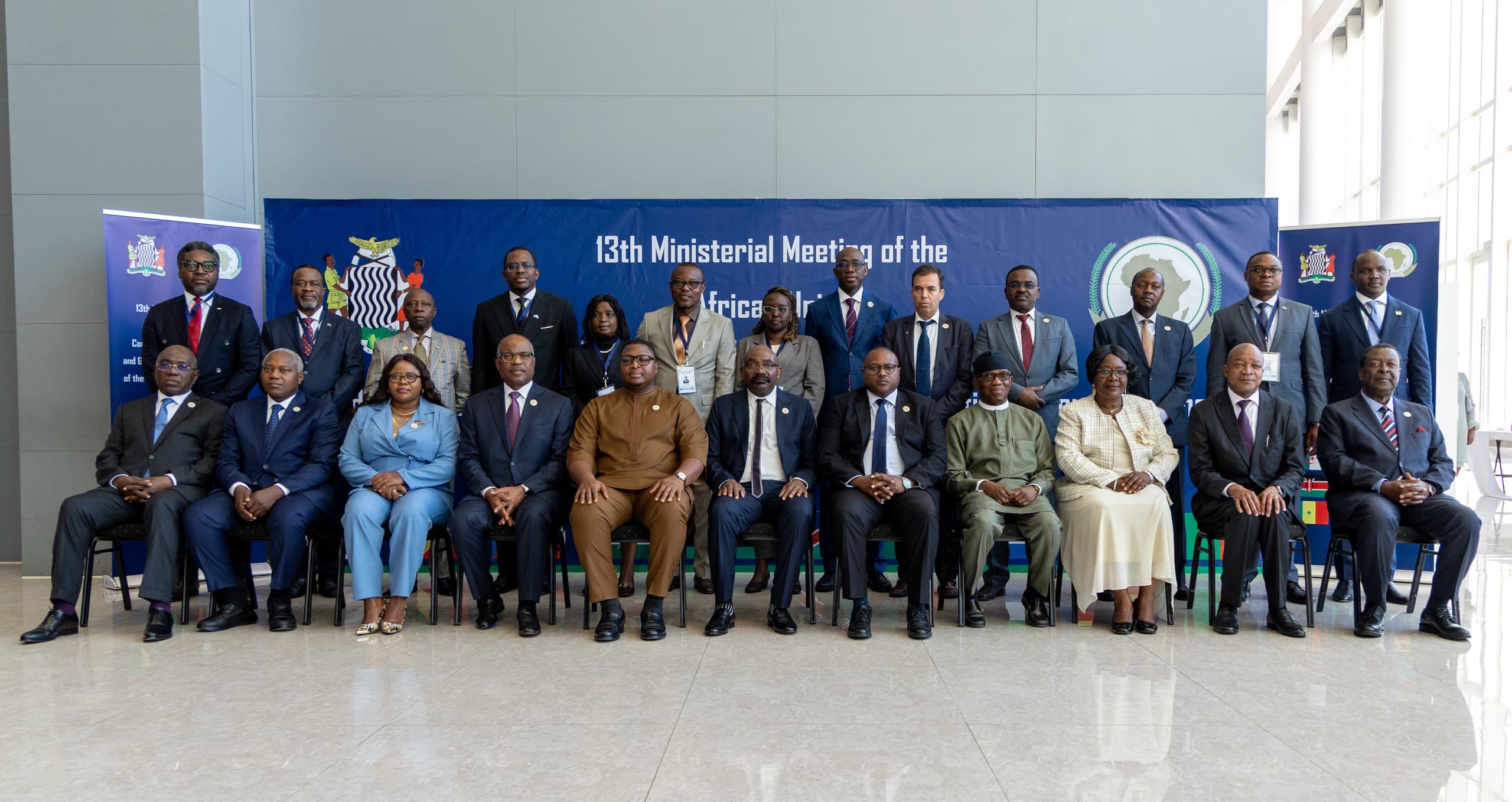
Prioritising UNSC Reforms at the C-10 Ministerial Meeting in Zambia
We must prioritize United Nations Security Council reforms in all our foreign engagements and speak with one united voice is the resounding message at the C-10 Ministerial Meeting taking place in Lusaka, Zambia where Prime Cabinet Secretary and Cabinet Secretary for Foreign and Diaspora Affairs, H.E. Dr. Musalia Mudavadi is leading the Kenyan delegation.
The prioritisation of UNSC reforms calls for the acceleration of Africa’s united pursuit for a more inclusive, representative, transparent, effective, and democratic Security Council as enshrined in the Ezulwini Consensus and the Sirte Declaration. The Ezulwini Consensus calls for Africa to hold at least two permanent seats on the UNSC, with all the privileges of permanent membership, including the right of veto and five non-permanent seats instead of the existing three.
Dr. Mudavadi has advanced the urgency for Africa to consolidate and harmonize its internal frameworks in line with the Common African Position on UNSC reforms to reflect the aspirations of a truly equitable international order. The PCS has also strongly supported the C-10 leadership’s unanimous decision to present the African Union’s model for a reformed Security Council to the President of the 79th UN General Assembly thereby marking a pivotal step in advancing Africa’s rightful place on the world stage.
Cognisant that the African continent is confronted by multifaceted security challenges, including the urgent need to redress historical injustices and Africa’s exclusion in the global peace security architecture; the C-10 Ministerial Meeting is also calling for the acknowledgement and subsequent addressing of these challenges within the context of today’s evolving global realities.
During the on-going C-10 Ministerial Meeting taking place in Lusaka, Zambia, the C-10 Committee is called upon to intensify high-level engagements at every available opportunity, particularly with the Permanent Members of the Security Council, regional groups, interest groups and key stakeholders to advance Africa’s legitimate demands as part of the UNSC reform agenda. Other regional bodies that are aligned to the UNSC Reforms include the Caribbean Community under the umbrella of CARICOM which recently presented its model for equitable representation and reform of the United Nations Security Council during the Intergovernmental Negotiations (IGN) meeting in New York.
Kenya engages on issues of the UN Security Council reforms through the African Group where as a member of the Committee of 10 (C-10) African Union African Heads of State and Government on the Reforms of the United Nations Security Council (UNSC), aligns itself with the African Union’s Common African Position (CAP) position as enshrined in the Ezulwini Consensus and espoused in the Sirte Declaration. The C-10 Committee is composed of Algeria, Equatorial Guinea, the Republic of the Congo, Kenya, Libya, Namibia, Senegal, Sierra Leone, Uganda, and Zambia.
Formal discussion on the UNSC reform commenced when the United Nations General Assembly (UNGA) began the Intergovernmental Negotiations (IGN) on the reforms of the UN Security Council during the Sixty- Third (UNGA63) Session of the UN General Assembly in 2009. According to UN General Assembly decision 62/557, the focus on the reforms was on the "Question of equitable representation on and increase in the membership of the Security Council and related matters.” The IGN process continues to enjoy broad support as the most acceptable forum for UN Member States to engage on the reform of the UN Security Council. It has assisted Member States to have a better insight into the various positions in terms of identifying areas of convergence and divergence.
There are six grouping within the IGN process that champion the UNSC reforms; these include, The African group which calls for 2 permanent seats and 2 additional non-permanent seats to make a total of 5 non-permanent seats, and a total of 7 seats for Africa. The G4 of Brazil, Germany, India, and Japan are seeking permanent membership on the Security Council support the Common African Position. The Uniting for Consensus Group (UfC) which counters the bids for permanent seats proposed by G4 nations and includes Pakistan, Turkey, Canada, Spain, Italy and Mexico. They oppose the expansion of permanent membership and veto power but supports the expansion of non-permanent seats. The group does not support the Common African Position. The L.69 is a group comprises of developing countries from Africa, Latin America and the Caribbean, Asia and the Pacific and support the Common African Position. The Arab Group of the League of Arab States calls for a minimum of two non-permanent seats for Arab states, as well as the inclusion of a permanent Arab seat in the expansion of the Security Council permanent membership. They too support the Common African Position. The CARICOM Proposal advances comprehensive reforms of the UNCS to ensure equitable and inclusive representation. It supports expanding both permanent and non-permanent membership, with particular emphasis on including underrepresented regions such as Africa, Latin America, and the Caribbean. CARICOM also proposes a rotating non-permanent seat for Small Island Developing States (SIDS) to address their unique vulnerabilities.
The UNSC Reforms constitute part of the myriad reforms that the UN envisages as it marks 80 years since its inception.