
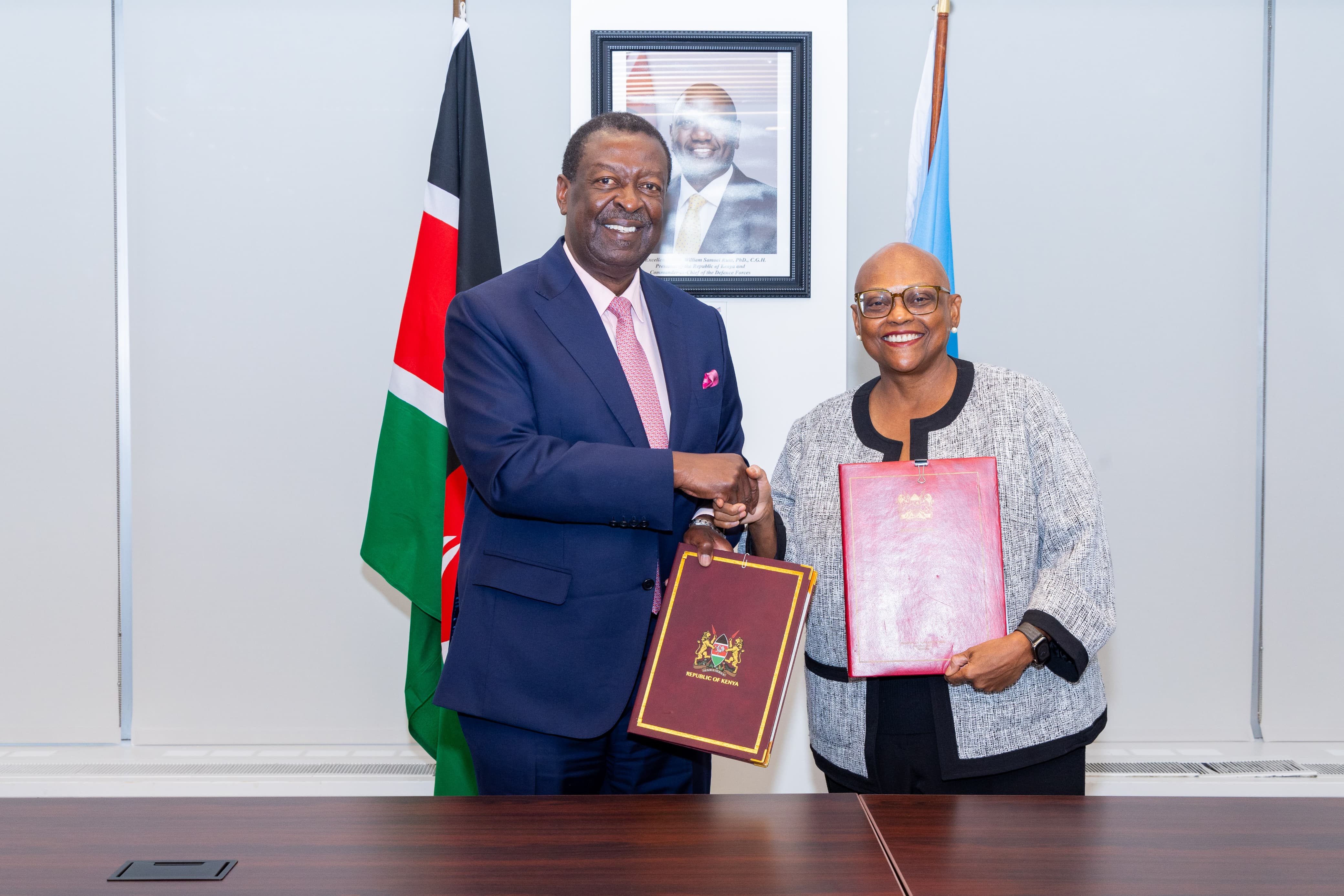
𝗞𝗲𝗻𝘆𝗮 𝗮𝗻𝗱 𝗛𝗼𝗼𝘃𝗲𝗿 𝗜𝗻𝘀𝘁𝗶𝘁𝘂𝘁𝗶𝗼𝗻 𝗮𝗴𝗿𝗲𝗲 𝘀𝘁𝗿𝗮𝘁𝗲𝗴𝗶𝗰 𝗰𝗼𝗹𝗹𝗮𝗯𝗼𝗿𝗮𝘁𝗶𝗼𝗻 𝗼𝗻 𝘁𝗲𝗰𝗵𝗻𝗼𝗹𝗼𝗴𝘆, 𝗳𝗼𝗿𝗲𝘀𝗶𝗴𝗵𝘁 𝗮𝗻𝗱 𝗔𝗜
Prime Cabinet Secretary and Cabinet Secretary for Foreign and Diaspora Affairs, H.E. Dr. Musalia Mudavadi, is advancing discussions on strategic partnerships that could strengthen Kenya’s economic transformation, investment competitiveness and evidence-based public policymaking.
The proposed cooperation with the Emerging Markets Working Group at Stanford University's Hoover Institution seeks to establish a framework through which Kenyan government institutions, research organisations and international experts can collaborate on development priorities.
The initiative aligns with Kenya's efforts to leverage international partnerships, technology and institutional expertise to support sustainable economic growth and improve development outcomes.
Proposed Platform to Strengthen County-Level Investment Intelligence
A key component of the proposed cooperation is the Kenya Resilience and Investment Platform (GRIPP Kenya), designed to generate intelligence on investment readiness, economic risks and resilience across the country's 47 counties, with eventual expansion to 290 constituencies.
The platform would provide policymakers with detailed information on local economic conditions, infrastructure, fiscal performance, climate exposure and service delivery.
By combining official statistics with higher-frequency data, GRIPP Kenya would support the identification of development constraints and strengthen coordination between national and county governments.
Linking International Expertise to Kenya's Development Priorities
The proposed Joint Declaration would broaden an existing cooperation framework covering digital transformation, artificial intelligence, governance innovation, public-policy analytics and institutional capacity.
The expanded framework would encompass economic transformation, investment readiness, fiscal governance, infrastructure, entrepreneurship, research and monitoring and evaluation.
NESC is proposed as the strategic policy home for the cooperation, while Riara University would provide the Kenyan academic and research base. The Emerging Markets Working Group and Hoover Institution would contribute technical expertise, research capabilities and international networks.
Individual programmes would remain subject to consideration and approval by the institutions involved.
Supporting Investment and Economic Policy Decisions
The proposed GRIPP Kenya platform would initially develop three analytical tools: a Digital Trade Readiness Index, a PPP Governance Tracker and a Sectoral Resilience Scorecard focusing on agriculture and the digital economy.
The tools are intended to help government institutions assess investment conditions, public-private partnership processes, digital commerce preparedness and sectoral resilience.
The proposed roadmap anticipates a working capability within approximately six months, followed by further development over a 12-month period.
The cooperation reflects the potential role of international research partnerships in strengthening Kenya's institutional capacity and supporting the implementation of national economic and social priorities.
Note: The briefing note identifies the proposed cooperation and its institutional arrangements. It does not itself document Dr. Mudavadi's specific remarks or decisions during the New York engagement. Those details should be added from the meeting statement or talking points to ensure the final story accurately reflects his participation