
𝐊𝐞𝐧𝐲𝐚 𝐒𝐞𝐭𝐬 𝐁𝐨𝐥𝐝 𝐑𝐞𝐟𝐨𝐫𝐦 𝐀𝐠𝐞𝐧𝐝𝐚 𝐭𝐨 𝐁𝐮𝐢𝐥𝐝 𝐚 𝐌𝐨𝐝𝐞𝐫𝐧, 𝐀𝐜𝐜𝐨𝐮𝐧𝐭𝐚𝐛𝐥𝐞 𝐚𝐧𝐝 𝐑𝐞𝐬𝐮𝐥𝐭𝐬-𝐎𝐫𝐢𝐞𝐧𝐭𝐞𝐝 𝐅𝐨𝐫𝐞𝐢𝐠𝐧 𝐒𝐞𝐫𝐯𝐢𝐜𝐞
Kenya Sets Bold Reform Agenda to Build a Modern, Accountable and Results-Oriented Foreign Service
Kenya has unveiled an ambitious reform agenda aimed at transforming its Foreign Service into a more agile, accountable and results-driven institution, with economic diplomacy, institutional renewal and digital transformation at the heart of its strategic priorities for the 2026/27 Financial Year.
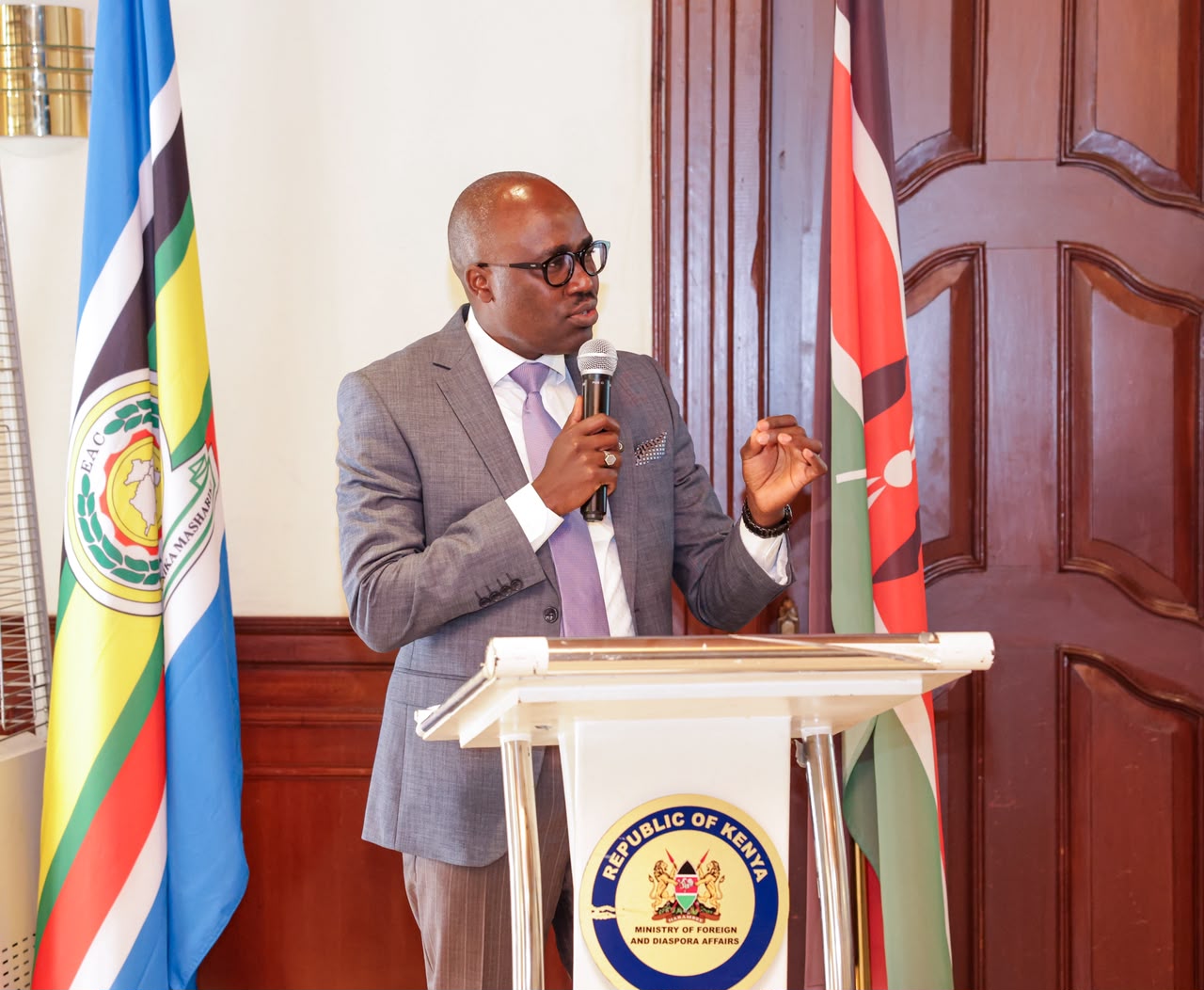
The roadmap was unveiled by Principal Secretary for Foreign Affairs, Dr. Korir Sing’Oei, CBS, during the opening of the State Department for Foreign Affairs Strategic Leadership Retreat. The three-day retreat brings together senior diplomats, directors and heads of departments to review the Department’s performance and align its priorities with an increasingly complex global environment.
Addressing the retreat, Dr. Sing’Oei said Kenya’s Foreign Service must continually adapt to emerging geopolitical realities, technological disruption and evolving global power dynamics while remaining focused on delivering tangible benefits to the Kenyan people.
“Our responsibility is not simply to manage today’s institution. It is to build a foreign service that Kenya will rely upon tomorrow,” he said.
On the issue of Institutional Reforms for a Future-Ready Foreign Service, the PS observed that central to the reform agenda was a comprehensive review of the State Department’s organisational structure to better respond to emerging diplomatic priorities and strengthen institutional effectiveness.
The proposed reforms include enhancing the Diplomatic Privileges and Immunities Unit; elevating the Parliamentary Liaison Office into a Directorate of Parliamentary and Sub-national Affairs to deepen engagement with Parliament and county governments; strengthening economic diplomacy through dedicated divisions for trade, investment and international finance; and accelerating the adoption of digital technologies, artificial intelligence and knowledge management to modernise diplomatic operations.
The reforms are intended to position Kenya’s Foreign Service to respond more effectively to evolving global challenges while enhancing service delivery, policy coordination and strategic influence.
Speaking to the issues of Accountability and Performance Dr. Sing’Oei underscored that institutional excellence must be anchored on sound governance, financial discipline and accountability.
Warning against recurring audit queries, procurement weaknesses and lapses in financial management, the Principal Secretary said the State Department would adopt a zero-tolerance approach to administrative inefficiency and ensure officers responsible for persistent shortcomings are held accountable.
Referring to his recent appearance before Parliament’s Public Accounts Committee, he stressed that avoidable audit issues divert valuable time and resources from advancing Kenya’s diplomatic agenda.
“We cannot continue answering routine questions arising from weaknesses in basic financial management,” he said, calling for stronger internal controls, prudent procurement practices and greater fiscal discipline across headquarters and Kenya’s missions abroad.
On advancing Kenya’s Global Influence the Principal Secretary observed that Kenya’s growing international profile presents both unprecedented opportunities and greater responsibility.
He cited the successful hosting of the Africa Forward Summit, participation in the G7 Leaders’ Summit, expanding bilateral partnerships and Kenya’s continued leadership in regional peace and security initiatives as evidence of the country’s rising diplomatic stature.
He noted that Kenya is increasingly recognised as an emerging middle power capable of shaping global discourse while advancing Africa’s priorities within multilateral institutions.
Reaffirming that economic diplomacy remains the cornerstone of Kenya’s foreign policy, Dr. Sing’Oei said diplomatic engagement must increasingly translate into measurable economic outcomes.
He highlighted expanded market access for Kenyan exports, continued engagement under the African Growth and Opportunity Act (AGOA), partnerships forged through the Forum on China-Africa Cooperation (FOCAC), Joint Commissions for Cooperation and high-level bilateral engagements as key platforms advancing trade, investment and sustainable development.
“The true measure of economic diplomacy is no longer the number of engagements we undertake, but the opportunities created for Kenyan businesses, investors, entrepreneurs and workers,” he said.
Recognising that institutional transformation depends on a capable workforce, the Principal Secretary announced significant career progression initiatives involving the promotion of 37 Directors, 33 Assistant Directors and 16 Principal Foreign Service Officers. The promotions form part of a broader succession planning strategy that will be supported by Career Progression Guidelines, structured mentorship programmes and continuous professional development, with particular emphasis on nurturing young officers and strengthening women’s leadership within the Foreign Service.
While commending staff after the Ministry was ranked the second-best performing ministry in the Government Performance Evaluation for the 2024/25 Financial Year, Dr. Sing’Oei challenged officers to strive for even greater excellence.
“Our ambition should not simply be to remain among the best-performing institutions. We should strive to become the benchmark for excellence,” he said.
He also called for stronger strategic communication, noting that many of Kenya’s diplomatic achievements received limited public visibility because they were not being communicated effectively.
“What is not communicated is often perceived as not having been done,” he observed, urging officers to better demonstrate how foreign policy contributes to economic growth, national development, investment attraction, job creation and the welfare of Kenyans.
On the issue of Strategic Priorities for 2026/27 the State Department will focus on seven strategic priorities during the 2026/27 Financial Year namely; Consolidating Kenya’s strategic influence globally; Aligning foreign policy more closely with national development priorities; Building a modern, digitally enabled Foreign Service; Strengthening institutional accountability, governance and performance; Investing in leadership development and professional excellence; Expanding partnerships with county governments, academia, the private sector, development partners and the Kenyan diaspora; and Modernising Kenya’s diplomatic infrastructure, including plans for a new headquarters and upgraded missions abroad.
Dr. Sing’Oei emphasised that diplomacy must ultimately be judged by its impact on the lives of Kenyans through increased trade and investment, job creation, stronger development partnerships, protection of Kenyans abroad and sustained regional peace and stability.
The Strategic Leadership Retreat is expected to shape the State Department’s policy direction for the 2026/27 Financial Year and reinforce Kenya’s commitment to building a modern, accountable and future-ready Foreign Service capable of advancing the country’s national interests and strengthening its position as one of Africa’s leading diplomatic actors.