
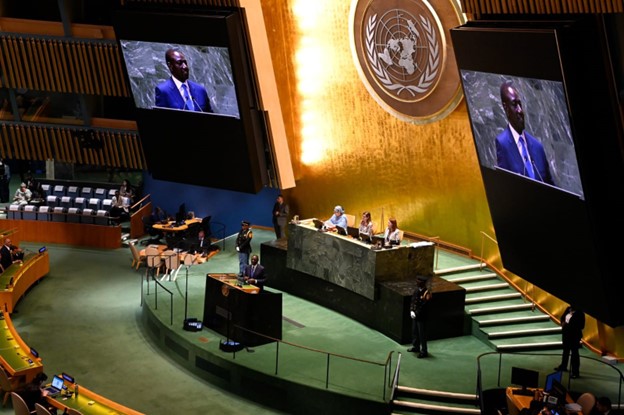
Kenya Participates at the 79th United Nations General Assembly, 2024
Kenya's attendance in the 79th session of the United Nations General Assembly (UNGA) in 2024 demonstrated its active involvement in global diplomacy and multilateralism. The assembly, themed "Peace, Prosperity, and Sustainability," offered Kenya with an opportunity to promote its national priorities, regional leadership, and dedication to global concerns such as climate change, peacekeeping, and sustainable development.
Key Highlights of Kenya's Engagement:
In a strong address to the 79th session of the United Nations General Assembly, the President emphasized the critical need for global cooperation to address a wide range of pressing issues. He praised the session's theme, "Unity in diversity for the advancement of peace, sustainable development, and human dignity for everyone everywhere," which reflects the UN's core ideals.
Global Security Concerns: The President emphasized the fragile situation of international security, citing increasing crises from Gaza to Ukraine and the resurgence of great power rivalries. He bemoaned the growing emphasis on separation over togetherness, warning that such polarization jeopardizes the promise of the UN Charter. He urged member states to foster dialogue and collaboration rather than unilateralism, which has led to a resurgence in nuclear weapons proliferation and reduced multilateral efficacy.
Kenya's Commitment to Peace: The President underlined Kenya's unshakeable commitment to world peace and security, highlighting the country's role in conflict resolution and peacekeeping operations, particularly in Somalia and Haiti. He emphasized Kenya's leadership role in the Multinational Security assistance Mission in Haiti, as well as the importance of ongoing international assistance and funding for these essential missions.
Call for Reform in Global Institutions: The President spent a considerable portion of his speech emphasizing the need for reform in the UN Security Council, which he regarded as outmoded and unrepresentative, particularly given Africa's demographic significance. He advocated for a more inclusive and accountable international security framework to better address current concerns.
Economic and Environmental Challenges: The President painted a grim picture of the current status of the Sustainable Development Goals (SDGs), claiming that progress has stagnated due to escalating conflicts and the effects of climate change. He emphasized the need of equitable international financial systems in assisting developing countries, calling for debt reduction and increasing investment in renewable energy, particularly in Africa. The President warned of the catastrophic effects of climate change and urged strong international collaboration to address environmental challenges. He emphasized the importance of creating a global plastics pact to prevent pollution and safeguard ecosystems.
The President advocated for a new vision of international cooperation that promotes human dignity, equity, and inclusion. He underlined the importance of joint effort in addressing global challenges, ensuring that development is shared by all nations and communities. The President's speech emphasized a commitment to a more equitable and robust global framework, reflecting the UN's basic principles.
Kenya Joins Global Coalition to Combat Plastic Pollution at UN General Assembly: Kenya has become the 66th country to join the High Ambition Coalition, which is dedicated to eliminating plastic pollution worldwide. Kenya's inclusion in the organization originates from its dedication to environmental sustainability, which recognizes the crucial need of eliminating plastic pollution for present and future generations. The President emphasized the dual threat that plastic waste provides to both the environment and the economy, while noting that plastic pollution supports various industries and creates jobs.
The High Ambition Coalition argues for a complete and circular approach to plastic waste management, calling for immediate action and successful interventions across the plastics lifecycle, from design and production to consumption and disposal. A recent letter signed by coalition members emphasized the importance of effective, legally binding global rules to reduce the negative economic, social, cultural, and environmental effects of plastic pollution, particularly in developing countries, least developed countries, and small island developing states.