
KENYA CENTRES PEACE DIPLOMACY IN RESPONSE TO A SHIFTING GLOBAL ORDER
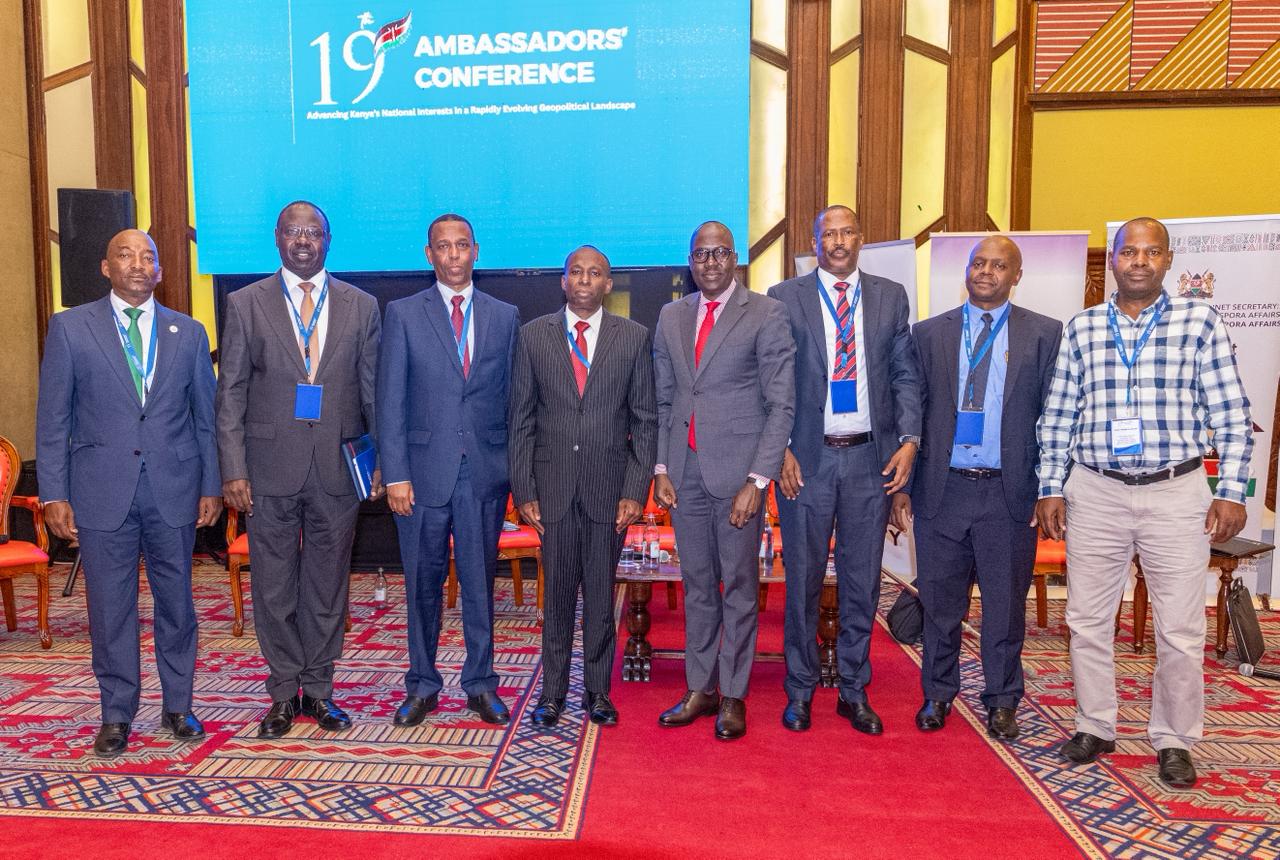
At the 19th Ambassadors’ Conference, Kenya positioned peace diplomacy as a cornerstone of its foreign policy, unveiling a forward-looking strategy designed for an increasingly fragmented and unpredictable global landscape.
In a keynote address, Patrick Maluki, Chairman of the Foreign Service Academy, outlined a doctrine that redefines peace as an active, continuous process, extending beyond conflict resolution to include inclusive governance, institutional resilience, and long-term stability.
He observed that the international system is undergoing a profound transformation, moving away from the relatively stable post-Cold War order toward a multipolar environment shaped by geopolitical rivalry, institutional gridlock, and complex transnational threats. In this context, he argued, traditional approaches to peace, largely reactive and security-focused, are no longer adequate.
“Peace must be built deliberately,” Prof. Maluki emphasized, noting that sustainable stability depends on tackling root causes of conflict such as inequality, exclusion, and weak governance structures.
Central to the framework is a shift from “negative peace,” defined as the absence of violence, to “positive peace,” which prioritizes justice, equity, and social cohesion. This approach reflects a broader evolution in global diplomacy, where prevention and long-term stability are increasingly prioritized over short-term crisis response.
Prof. Maluki highlighted preventive diplomacy as both a strategic and cost-effective tool in managing modern conflicts, which are often prolonged and complex. Early intervention, he noted, can significantly reduce both human suffering and economic disruption.
The doctrine further advances a model of multidimensional diplomacy, blending formal state negotiations with informal dialogue and grassroots engagement. By incorporating civil society, women, and local actors into peace processes, this approach strengthens legitimacy and ensures more durable outcomes.
At the same time, he called for “principled pragmatism” in diplomatic practice. With rising geopolitical competition, particularly within institutions such as the United Nations Security Council, reaching consensus has become more difficult. Diplomacy, he argued, must therefore balance adherence to international norms with the flexibility needed to achieve practical results.
Kenya’s position is reinforced by its own track record in regional peacebuilding and mediation, as well as its role as host of the United Nations Office at Nairobi, which underscores the country’s strategic importance within global diplomacy.
The conference also acknowledged the growing complexity of today’s security environment. The Horn of Africa remains under pressure from intensifying great power competition, while hybrid threats, including violent extremism and cyber risks, are reshaping conflict dynamics. Climate change, described as a “threat multiplier,” is exacerbating resource scarcity and displacement across the region.
Economic vulnerabilities further compound these challenges. Rising debt, unemployment, and inequality are weakening state resilience and increasing the risk of instability, highlighting the need to align economic policy with peacebuilding efforts.
In response, Kenya signaled its ambition to become a hub for diplomatic innovation. Proposals such as establishing a Regional Mediation and Peacebuilding Academy in Nairobi point to a broader effort to institutionalize expertise and strengthen Africa’s capacity for conflict prevention.
As global power structures continue to evolve, the framework presented at the conference positions Kenya as both a practitioner and thought leader in modern diplomacy. By advancing a model grounded in prevention, inclusivity, and adaptability, the country is helping redefine peace to meet the demands of a changing world.
The message from the conference is clear: in an era marked by uncertainty and complexity, peace must be intentionally built through deliberate, inclusive, and forward-looking diplomatic action.