
Kenya Calls for Strategic Diplomacy as Global Order Shifts
Kenya Calls for Strategic Diplomacy as Global Order Shifts
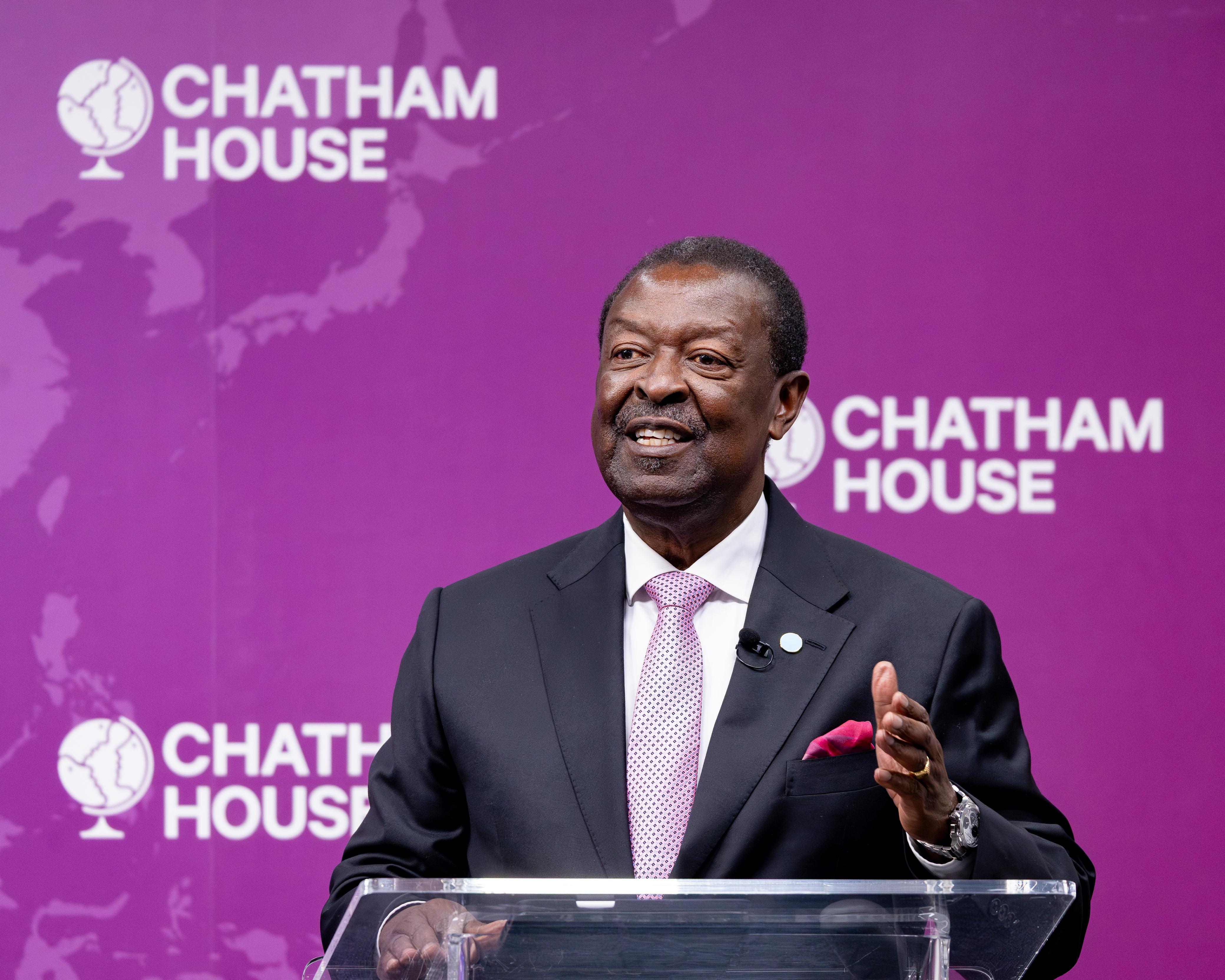
Speaking on Monday at Chatham House in London, Prime Cabinet Secretary and Cabinet Secretary for the Ministry of Foreign and Diaspora Affairs, Dr. Musalia Mudavadi, said Kenya is recalibrating its foreign policy to respond to an evolving global order marked by emerging alliances, economic disruptions, and intensifying geopolitical competition.
In his lecture titled “Kenya’s Expanding Foreign Policy Interests in a Changed World Order,” Dr. Mudavadi outlined a balanced diplomatic strategy that safeguards Kenya’s national interests while strengthening Africa’s voice in global affairs. He emphasized the need for pragmatic engagement and strategic partnerships to navigate the complex international landscape.
He noted that Kenya remains committed to neutrality and diplomacy amid global conflicts, including the ongoing crisis in the Middle East, and called for de-escalation, protection of civilians, and strict adherence to international law. Mudavadi said Kenya has not aligned with any party in the conflict but continues to advocate for dialogue, restraint, and humanitarian protection through established multilateral institutions. He cautioned that prolonged instability in the region could disrupt global trade and energy supply, particularly if maritime routes such as the Strait of Hormuz remain blocked, with significant economic and security implications for many countries, including those in Africa.
The Cabinet Secretary observed that recent global crises, including the COVID-19 pandemic and the Russia-Ukraine War, have underscored the urgent need for African countries to diversify supply chains and accelerate regional economic integration, particularly through the African Continental Free Trade Area. He emphasized that Africa must transform its vast natural resources, technological potential, and youthful population into strategic economic influence on the global stage.
The Prime Cabinet Secretary reiterated that Kenya has adopted a multi-alliance foreign policy approach aimed at diversifying international partnerships while avoiding alignment with competing geopolitical blocs. This strategy, he said, enables the country to pursue mutually beneficial relations while advancing regional stability and economic growth.
He reaffirmed Kenya’s commitment to deeper integration within the East African Community, which represents a market of more than 300 million people, noting that intra-regional trade continues to grow as member states strengthen economic cooperation. At the continental level, Kenya supports the integration agenda of the African Union, including initiatives aimed at promoting the free movement of people, improving connectivity, and strengthening economic collaboration across Africa.
The CS for Foreign and Diaspora Affairs said Kenya’s global engagement also reflects diversified partnerships, including longstanding economic and security cooperation with the United States, the United Kingdom, and the European Union in areas such as trade, defence, climate action, health, and technology. He noted that Kenya’s relations with China are increasingly evolving beyond infrastructure development to focus on trade, local manufacturing, and technology transfer, while cooperation with India and Gulf states including the United Arab Emirates continues to expand in sectors such as logistics, renewable energy, and financial services.
Dr. Mudavadi also announced that Kenya will jointly host the Africa Forward Summit 2026 with France in Nairobi in May to promote innovation, investment, and industrial transformation across the continent.
On international security, the Prime Cabinet Secretary said Kenya had concluded its mandate under the Multinational Security Support Mission in Haiti following the adoption of United Nations Security Council Resolution 2793 (2025), which transitions the mission into a Gang Suppression Force. He added that the final drawdown will take place in the coming weeks to ensure a smooth transition.
Mudavadi linked Kenya’s expanding diplomatic engagement to improving economic stability at home, noting that the country’s Gross Domestic Product growth rose from 4.7 percent in 2024 to an estimated 5 percent in 2025, while inflation declined to 4.5 percent by the end of last year. Foreign exchange reserves have also increased to approximately USD 14.6 billion, equivalent to more than six months of import cover, while diaspora remittances exceeded USD 5 billion in 2025, helping stabilize the exchange rate and strengthen investor confidence.
He said Kenya will continue to pursue balanced and inclusive diplomacy focused on advancing climate action, digital transformation, economic growth, and peacebuilding, while positioning Africa as an active and influential player in global affairs.
“The world order may be evolving, but our commitment to responsible global citizenship remains constant,” Dr. Mudavadi said, adding that Kenya stands ready to engage, partner, and contribute to building a more representative and stable international system.