
Kenya and Japan Strengthen Development Ties Ahead of TICAD 9
Kenya and Japan have reaffirmed their longstanding and strategic development partnership, with renewed focus on agriculture, infrastructure, and youth empowerment.
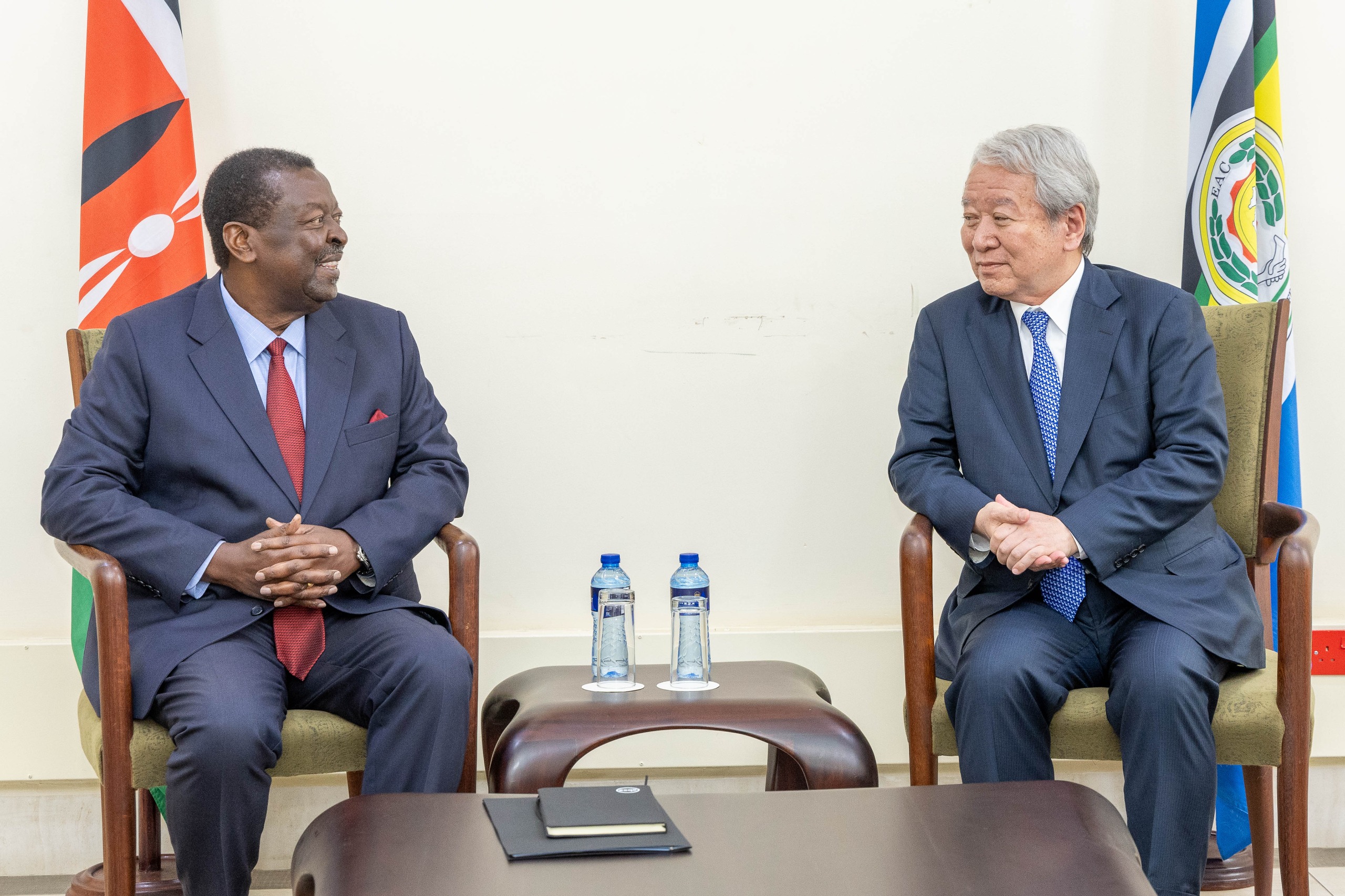
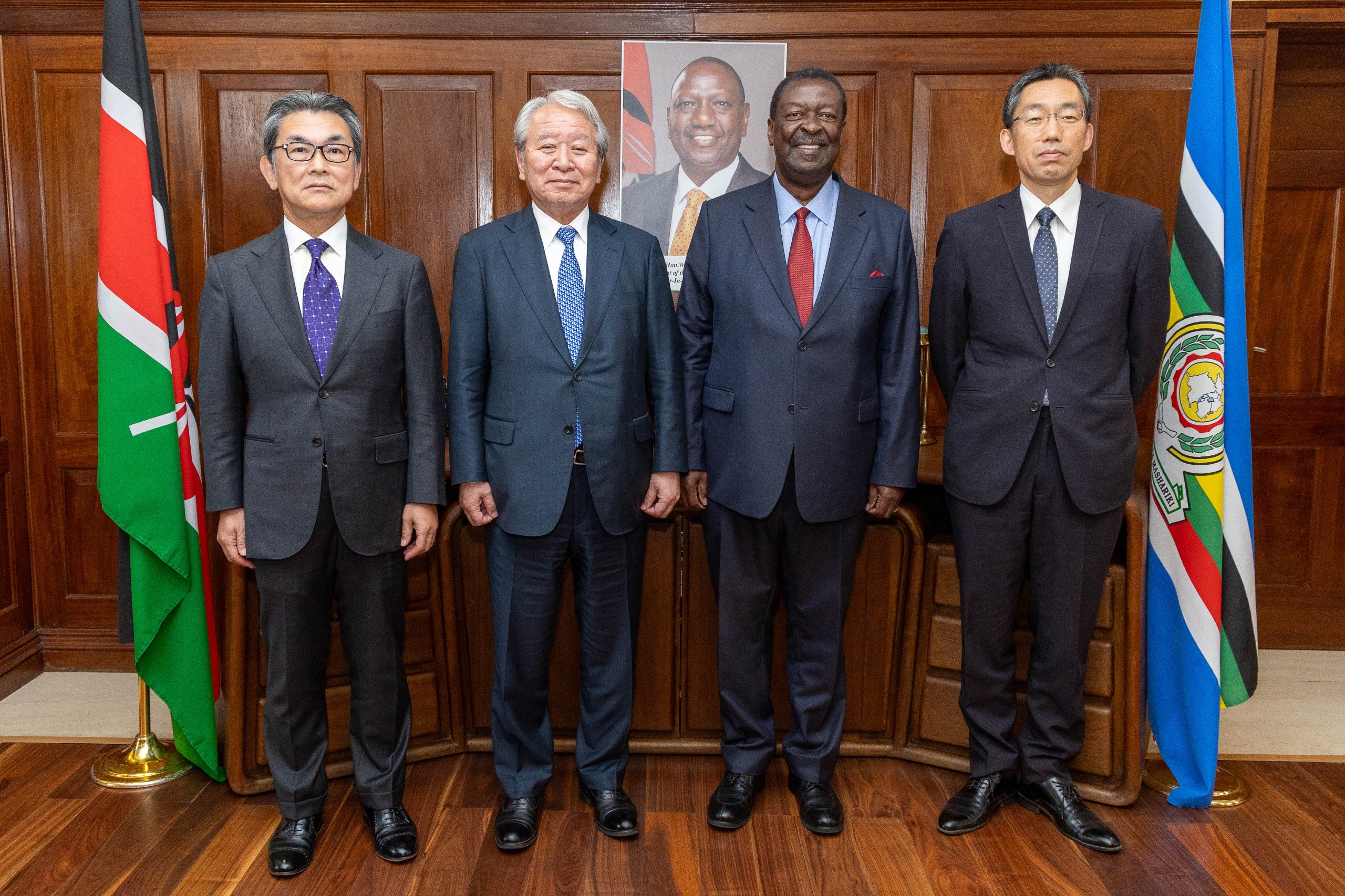
This commitment was underscored during a high-level consultative meeting held today between the Prime Cabinet Secretary and Cabinet Secretary for Foreign and Diaspora Affairs, Hon. Musalia Mudavadi, and Dr. Tanaka Akihiko, President of the Japan International Cooperation Agency (JICA).
Dr. Tanaka is currently in the country for a working visit, during which he toured a number of JICA-funded projects across Kenya. One of the key highlights of his visit was an inspection tour of the Ahero Irrigation Scheme in Kisumu County. Rehabilitated through JICA support, the Ahero Irrigation Scheme has played a critical role in enhancing food security, boosting rice production, and creating employment in the agricultural value chain. It continues to be a vital contributor to economic empowerment in the region.
The Prime CS lauded JICA’s continued commitment to supporting Kenya’s agricultural sector and direct contribution to national goals of self-sufficiency in food production.
“Demographic data shows that rice is one of Kenya’s most consumed staple foods, and the increased production supported by JICA has been a major boost not only to food security but also to local livelihoods,” said Hon. Mudavadi.
Dr. Tanaka also visited the site of the Mombasa Gateway Bridge and expressed satisfaction with the progress of construction at the Port of Mombasa. The bridge, a flagship infrastructure project funded by JICA, is poised to transform regional connectivity and trade logistics in East Africa. The Government of the Republic of Kenya (GoK), through the Kenya National Highway Authority (KeNHA) and support of the Government of Japan through JICA, is developing the Mombasa Gate Bridge (MGB) Construction Project with the aim of providing a functional road connection between Mombasa Island and Mombasa Mainland South both separated by the Likoni Channel which is currently crossed through ferries operated by the Kenya Ferry Service (KFS).
“Once completed, the Mombasa Gateway Bridge will not only benefit Kenyans but will also serve as a key trade corridor for Kenya and its neighbouring countries,” said Dr. Tanaka during his visit to the Port, where he was received by Kenya Ports Authority Managing Director, Captain William Ruto.
CS Mudavadi acknowledged Japan’s major role in Kenya’s infrastructure development, noting that the majority of bridges in the coastal region have been constructed with Japanese support.
“All major bridges in the coastal region have been built through support from the Japanese government. The Mombasa Gateway Bridge will open up the entire coastal region and further integrate it into the national and regional economy,” he said.
The Mombasa Gateway Bridge is designed to reduce traffic congestion, improve transport efficiency, and elevate Kenya’s status as a regional trade and logistics hub while opening up Kenya’s South Coast region for economic development. The 11-kilometre Bridge starts in Mombasa County and terminates in Kwale County, in the process, traversing three sub-Counties (Mombasa Island, Likoni and Matuga) and five administrative locations of Majengo, Likoni, Mtongwe, Shika Adabu and Ng’ombeni.
On the Mombasa Island side, the bridge structure starts on Lumumba Road near King’orani Prison in rising gently to cross over the Mombasa Railway Station, then overhead Moi Avenue to the west of Canon Towers. Henceforth, the bridge precedes overhead Archbishop Makarios Rd to Ganjoni, turns right overhead Liwatoni and crosses Likoni Channel to enter Likoni side at the ruins of the abandoned Sultan of Zanzibar Place near Puma Primary school. The bridge then proceeds along the eastern shoreline of Mweza creek and starts descending ultimately touching down near the Javi la Wageni Primary School from where it proceeds as a 4-lane highway to cross Mtongwe Rd at the Post Office then joining the Mombasa Southern Bypass at Ziwani on the boundary with Kwale County.
Looking ahead, the two nations are preparing for the upcoming Ninth Tokyo International Conference on African Development (TICAD 9) scheduled for Wed. 20th - Fri. 22nd August, 2025 in Yokohama, Japan. The Government of Japan has been leading this conference since 1993, co-hosted by United Nations, United Nations Development Programme (UNDP), World Bank and African Union Commission (AUC).
Japan’s Ambassador to Kenya, H.E. Hiroshi Matsumoto, urged Kenya to secure exhibition space during TICAD9 to showcase its agricultural exports such as tea, coffee, and cut flowers. He emphasized that TICAD provided an ideal platform to promote Kenya’s agribusiness potential to Japanese investors and international development partners.
Dr. Mudavadi confirmed Kenya’s readiness to participate actively in TICAD 2025 and expressed optimism for deeper cooperation during the event.
For decades, Kenya and Japan have maintained strong diplomatic and development relations. Through JICA, Japan has funded critical projects across the country, improving access to clean water, expanding educational opportunities, strengthening public health systems, and supporting infrastructure growth.