
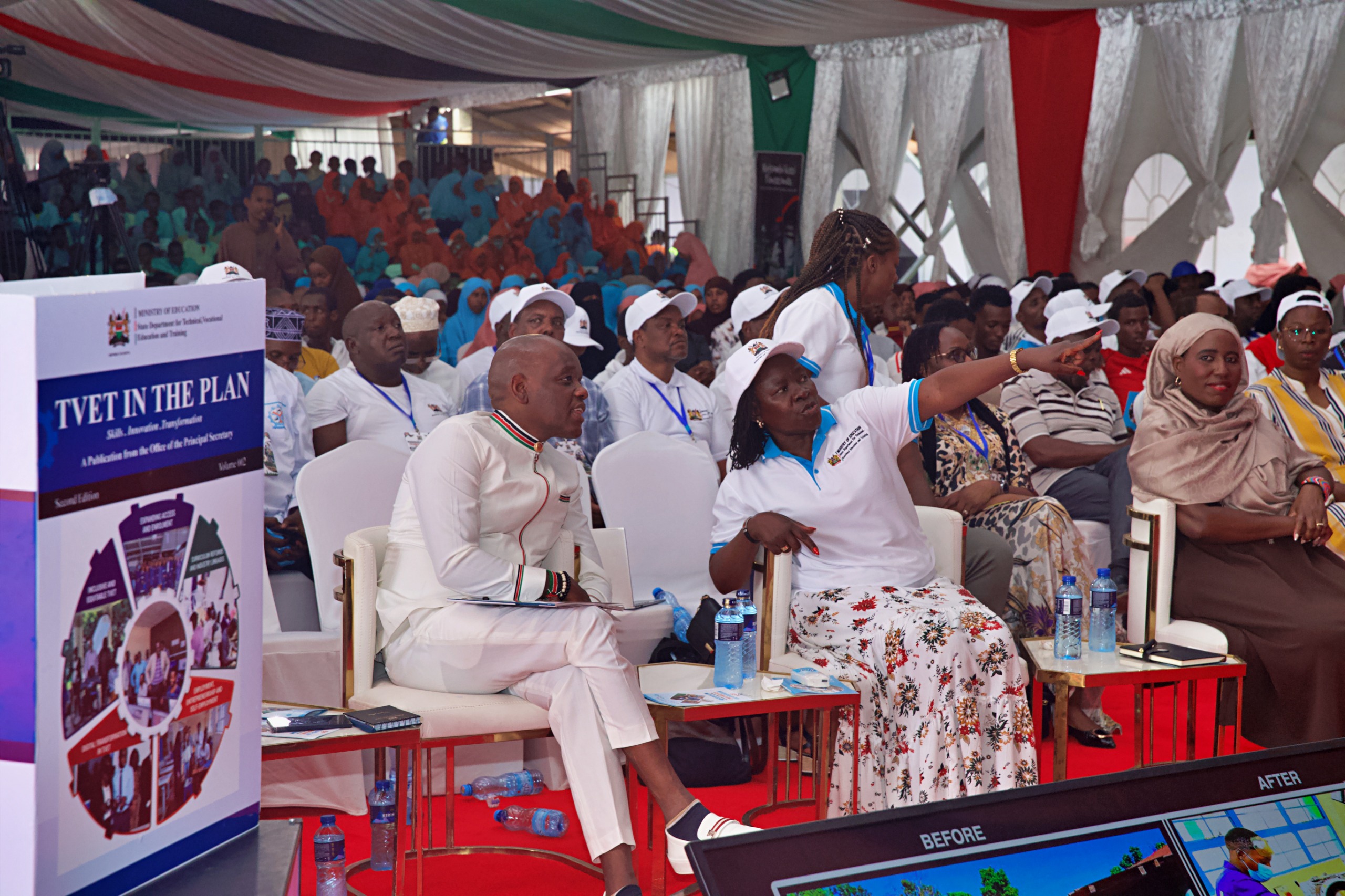
International Academic Cooperation Takes Centre Stage at Madaraka Day 2026 Education Week in Wajir County
International academic cooperation emerged as a key pillar of Kenya’s foreign policy during the Madaraka Day Celebrations 2026 Education Week in Wajir County, where stakeholders underscored the role of global education partnerships, research collaboration, and skills development in advancing national development and competitiveness in the global economy.
The State Department for Foreign Affairs is participating in the Madaraka Day Celebrations 2026 Education Week, engaging education stakeholders and the local community on Kenya’s foreign policy and its connection to education, innovation, and economic transformation.
Held under the theme “Education, Skills and the Future,” this year’s celebrations focus on the critical role of education in preparing citizens to thrive in an increasingly knowledge-driven and technology-oriented global economy. The theme emphasizes that true self-determination in the modern era extends beyond political freedom to include the capacity of citizens to innovate, produce, and compete globally.
A major highlight of the exhibition was a panel discussion on International Academic Cooperation and its significance for Kenya’s development agenda. Participants explored how educational partnerships and cross-border knowledge exchange serve as important instruments for strengthening international cooperation through student and faculty exchanges, collaborative research, institutional partnerships, and the sharing of expertise.
The discussion highlighted the growing importance of academic mobility and exchange programmes in enhancing Kenya’s human capital development. Experts noted that international scholarships, collaborative research projects, and joint academic publications provide valuable opportunities for Kenyan students, researchers, and institutions to access global knowledge networks while contributing to innovation and scientific advancement.
Panelists further observed that international academic cooperation strengthens people-to-people connections, fosters mutual understanding among nations, and creates enduring professional and institutional networks. Through sustained engagement, countries can facilitate technology transfer, attract research funding, expand innovation ecosystems, and support broader economic and social development goals.
The session also examined the wider benefits of international collaboration, including increased access to emerging technologies, expanded research opportunities, and stronger institutional partnerships that support national development priorities.
The focus on international academic cooperation aligns with Kenya’s long-term development aspirations under Vision 2030, the Bottom-Up Economic Transformation Agenda (BETA), and the African Union Agenda 2063, all of which identify human capital development as a central driver of economic growth and social transformation.
Participants noted that Kenya faces a defining challenge in preparing its workforce for a rapidly changing global landscape shaped by artificial intelligence, renewable energy, and the digital economy. As technological advancements continue to transform industries and labour markets, there is a growing need to equip young people with relevant skills and competencies to remain competitive.
Beyond the panel discussions, the Education Week exhibition features a variety of interactive activities designed to engage the public and showcase developments in the education sector. These include innovation exhibitions, skills competitions, career and mentorship sessions, skills clinics, cultural performances, tree-planting initiatives, and recognition awards.
The State Department for Foreign Affairs’ participation seeks to deepen public understanding of the link between education and foreign policy while demonstrating how international educational cooperation can contribute to national development, innovation, and sustainable economic growth.
As Kenya marks Madaraka Day 2026, the conversations in Wajir underscore a growing recognition that international academic cooperation is no longer a peripheral component of international engagement but a strategic pathway for developing skills, advancing innovation, and positioning the country to compete effectively in the global knowledge economy.