
Kenya Positions Health Security at the Centre of National Resilience and Global Cooperation
Kenya has called for a more resilient, self-reliant and prevention-oriented health system, warning that emerging global risks increasingly make health security a matter of national resilience, economic stability and international cooperation.
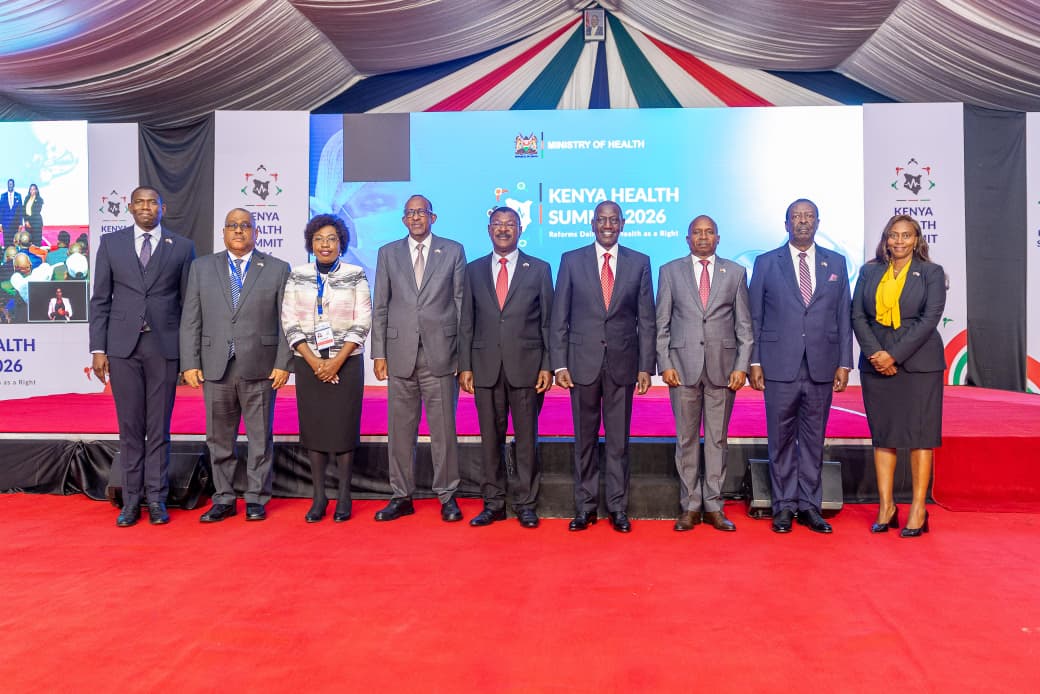
Speaking at the Kenya Health Summit at the Kenyatta International Convention Centre (KICC) in Nairobi, Prime Cabinet Secretary and Cabinet Secretary for Foreign and Diaspora Affairs Dr. Musalia Mudavadi urged Kenya to move decisively from reacting to health emergencies to anticipating, preventing and preparing for them.
He commended the Ministry of Health, under Cabinet Secretary Aden Duale, for convening the summit, which brings together national and county governments, development partners, the private sector, civil society and other stakeholders to take stock of health reforms and chart the way forward.
Mudavadi said the increasingly complex global health environment marked by disease outbreaks, antimicrobial resistance, non-communicable diseases, demographic changes, climate-related shocks and rapid technological transformation requires a coordinated national response.
“Health is no longer only a social-sector concern; it is a question of national resilience, economic security and sustainable development,” he said.
He urged Kenya to strengthen health emergency preparedness through sustained investment in disease surveillance, diagnostics, health workers, medical supply chains, digital health information systems and community-level response structures.
“The real test of a health system is not how it performs when conditions are normal, but whether it can continue functioning when they are not,” Mudavadi said, underscoring the importance of building systems that can withstand disruption while maintaining essential services.
A central element of his message was the need to strengthen Kenya’s health sovereignty. Mudavadi called for sustainable domestic financing and strategic international partnerships that build national capacity rather than deepen dependency.
He advocated greater investment in local production of medicines, vaccines and diagnostic products, alongside research, innovation and quality assurance. Beyond reducing exposure to international supply disruptions, he said, such investments could support industrialisation, create employment and strengthen Kenya’s economic resilience.
The approach reflects a broader recognition that access to essential health commodities is not only a public health concern but also a strategic national interest, particularly during periods of global disruption.
Mudavadi also placed climate resilience firmly within Kenya’s health agenda. He cited floods, droughts, extreme heat, food insecurity and changing disease patterns as growing pressures on communities and health infrastructure.
He called for climate considerations to be incorporated into health infrastructure, supply chains, surveillance systems and emergency preparedness, alongside stronger coordination between institutions responsible for health, environment and disaster response.
Kenya’s regional and international role, he noted, further reinforces the need for cooperation beyond its borders. As a regional hub for trade, aviation, tourism and diplomacy, the country has a strategic interest in strengthening cross-border disease surveillance, information sharing and coordinated emergency response.
Mudavadi urged deeper collaboration with neighbouring countries and regional institutions, positioning health security as an area where regional cooperation can protect populations while strengthening economic and diplomatic stability.