
Foreign Affairs Department Strengthens Environmental Conservation Efforts at Kangaita Forest
The State Department for Foreign Affairs has reaffirmed its commitment to Kenya’s environmental conservation agenda through a tree-growing exercise at Kangaita Forest, bringing the cumulative number of seedlings planted by the Department at the forest to 5,010.
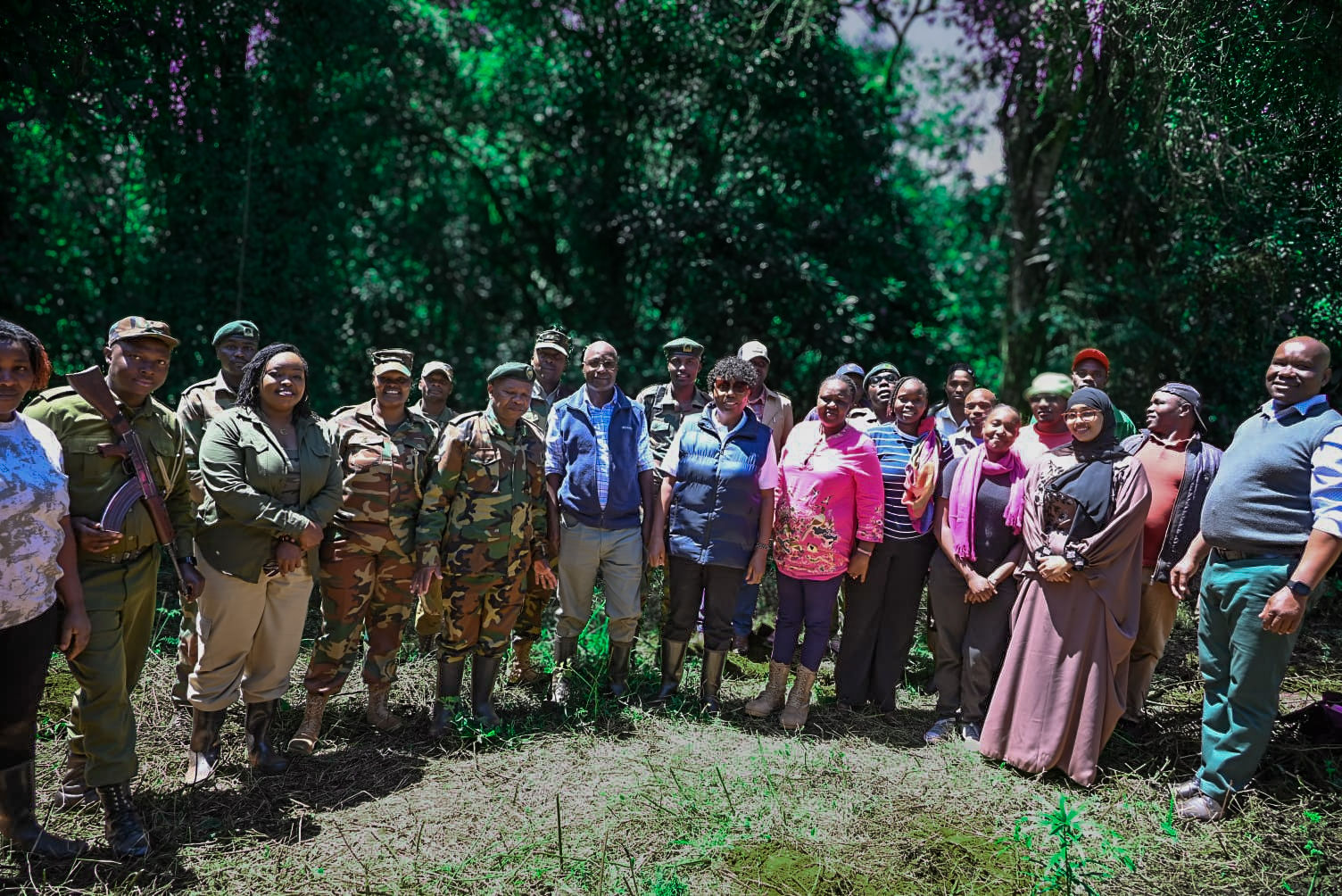
The exercise brought together officials from the State Department, Kenya Forest Service (KFS), the Community Forest Association and other stakeholders, highlighting the importance of collaborative action in advancing forest conservation, biodiversity protection, climate resilience and water security.
Speaking during the exercise, Secretary, Foreign Service Management, Amb. Michael Kiboino, said the initiative reflected the State Department’s commitment to contributing to national development priorities beyond its traditional diplomatic mandate.
He noted that environmental conservation is increasingly intertwined with sustainable development, climate resilience and water security, making the protection and restoration of forests a shared national responsibility.
Amb. Kiboino emphasised that the success of tree-growing initiatives should not be measured solely by the number of seedlings planted, but by their survival, maintenance and growth to maturity. He called for sustained efforts to nurture and protect trees planted through such initiatives to ensure lasting environmental impact.
The 5,010 seedlings planted by the State Department at Kangaita comprise 1,850 Podocarpus latifolius, 1,350 Syzygium guineense, 1,500 Macaranga kilimandscharica, 300 Rauvolfia caffra and 10 Prunus africana.
Kangaita Forest Station Manager Justus Njenga said the forest covers approximately 4,760 hectares, including 195.9 hectares under tea plantation. He noted that the forest is organised into four management blocks to facilitate effective administration, surveillance and conservation, with rangers responsible for its protection.
Njenga called for continued support for forest maintenance to ensure that trees planted through conservation and tree-growing initiatives are adequately protected and nurtured to maturity.
He further noted that Kangaita supports diverse wildlife, including elephants, buffaloes and colobus monkeys, as well as numerous bird and smaller mammal species. The forest is also an important water catchment, supporting rivers such as Keringa, Ruiru and Wamunoga. Its conservation therefore has significance beyond the forest ecosystem, contributing to biodiversity protection, water security and the wellbeing of communities and economic activities downstream.
The State Department commended KFS for its technical support and recognised the Community Forest Association for its important role in promoting community participation and sustainable forest management.
The exercise also underscored the growing nexus between environmental sustainability and diplomacy. Climate action, biodiversity conservation, water security and sustainable development are increasingly central to Kenya’s international engagements and global commitments.
Through its participation in tree-growing and conservation initiatives at Kangaita, the State Department is complementing Kenya’s domestic environmental priorities while reinforcing the role of diplomacy in advancing sustainable development and climate resilience.
The Kangaita initiative demonstrates the value of bringing together government institutions, conservation agencies and communities around shared environmental objectives. While tree-growing exercises help strengthen awareness and institutional commitment, their enduring impact will ultimately depend on sustained post-planting care to ensure that the seedlings survive, mature and contribute to a healthy, resilient and productive forest ecosystem.